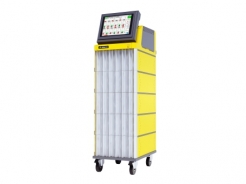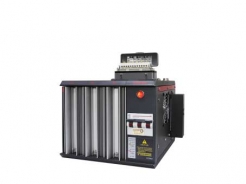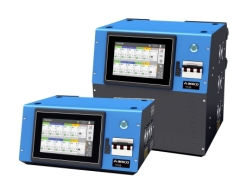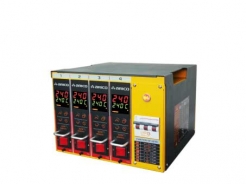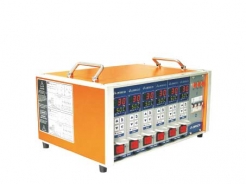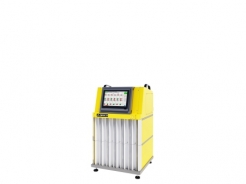
TC53 Hot Runner Temperature Controller
Overview
- Modular layout with exceptional value.
- Predicts potential leaks for early warnings.
- Identifies molds automatically for fast setup.
- Visualizes mold layouts for instant detection.
-
Supports OPC UA for smart factory connectivity.
| TC53 | Module |
|
Number of Zones per Module |
2 zones |
|
Max. Current per Zone |
15A |
|
Input Power |
230Vac±10%/24Vdc±5%, 50/60Hz |
|
Input Thermocouple Type |
J/K type |
|
Output Power |
3450W, 230Vac/15A(per zone) |
|
Output Mode |
Zero cross/Phase angle |
|
Control Accuracy |
±0.25% FS |
|
Measurement Accuracy |
±0.25% FS |
|
Temperature Control Range |
0~600°C/32~999°F |
|
Storage Temperature |
-20~70°C/-4~158°F |
|
Operating Temperature |
-10~50°C/14~122°F |
|
Operating Humidity |
0~80% RH(no condensate) |
|
Communication Mode |
RS-485(standard MODBUS, isolated)/UART |
|
Communication Speed |
38400/57600 |
|
Temperature Alarm Mode |
Upper limit/Lower limit/Standby upper limit/Standby lower limit/Absolute value alarm |
|
Abnormal Alarm |
Thermocouple: Short/Break/Reverse; Heater: Short/Break/Overload; TRIAC: Short; Fuse open-circuit |
|
Fuse |
Quick response ceramic 500Vac/20A, 30mm |
|
Detection Functions |
Temperature detection/Current detection/Overvoltage protection(≧280Vac start) |
Hot Runner Temperature Controller FAQ(TC53)
Q1: What are the primary applications of the TC53 Hot Runner Controller?
A1: The TC53 series is specifically designed for small-scale molds or systems requiring 1-2 control zones. It focuses on providing a stable and highly cost-effective thermal control solution for precision injection molding in compact production environments.
Q2: How does the TC53 protect the mold and extend heater lifespan?
A2: It features an integrated Soft Start function to mitigate inrush current during cold starts, protecting the heaters. It also provides comprehensive load monitoring and short-circuit protection to ensure operational safety within a budget-friendly framework.
Q3: Is the maintenance cost high if a TC53 unit fails?
A3: Not at all. The TC53 utilizes a stand-alone modular design. In the event of an abnormality, technicians can quickly swap out the individual controller without a full system overhaul or complex rewiring, significantly lowering long-term maintenance expenses.
Q4: What is the temperature control performance of the TC53 series?
A4: The TC53 is powered by industrial-grade PID Auto-tuning technology, delivering excellent measurement and control accuracy. Even as an economical model, it ensures stable thermal output to maintain consistent part quality.
Q5: What are the features of the TC53's user interface?
A5: The TC53 utilizes an all-digital display interface, replacing traditional complex physical buttons with a sleek, minimalist layout. This allows operators to read key data directly and get started quickly without complicated configurations, improving parameter setting efficiency.
Q6: How does the TC53's hardware design enhance cost-effectiveness?
A6: The TC53 adopts a highly efficient modular mechanical design, significantly reducing component complexity and hardware costs. This integrated structure maintains stable performance while allowing manufacturers to achieve flexible space allocation and expansion within a limited budget.
Q7: How to identify system abnormalities quickly via the TC53?
A7: The digital panel displays real-time alarm codes (such as thermocouple or heater failures). This intuitive mechanism enables operators to identify issues and perform troubleshooting instantly, even without extensive electrical expertise.
Q8: How does the TC53 reduce the risk of mold damage?
A8: Built-in Leakage Detection monitors abnormal current changes and provides early warnings to help prevent costly repairs and production downtime.
Q9: What are the visual features of the TC53 UI?
A9: The large full-color touchscreen provides intuitive operation. Graphical Mold View combines mold images with temperature data to clearly display Heat Distribution.
Q10: How does the TC53 improve maintenance efficiency?
A10: With VNC remote access, technicians can check parameter changes and alarm history remotely, enabling faster troubleshooting and more efficient maintenance.
related products